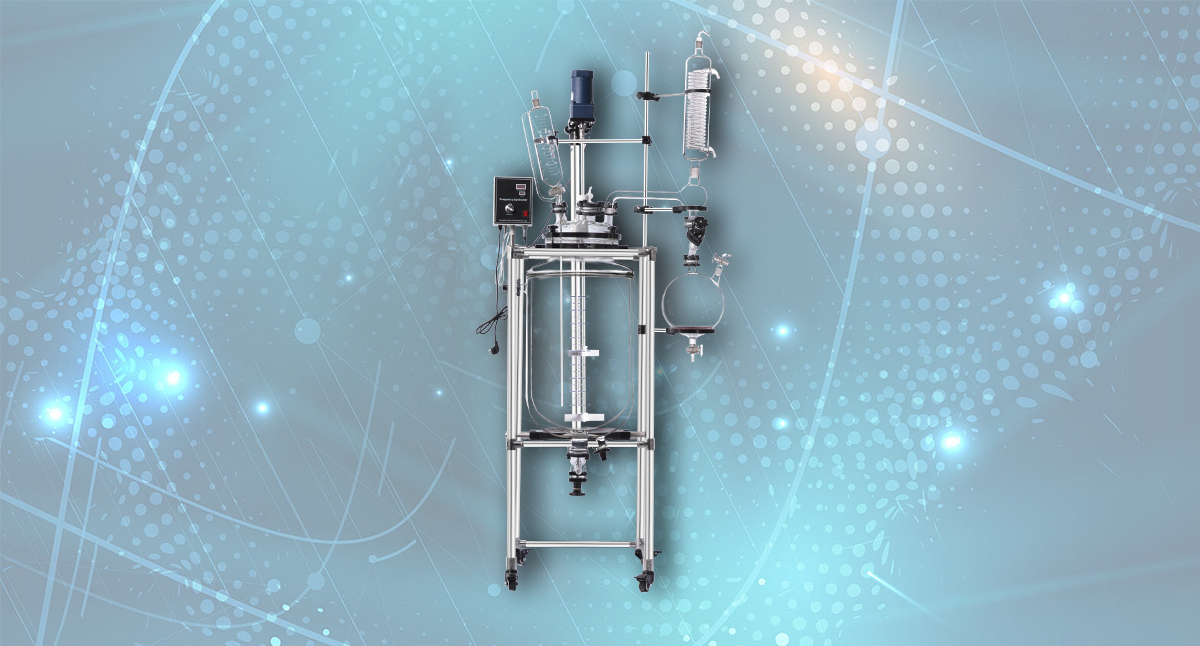
Which experiments require the use of double layer glass reactors?
In laboratories in the fields of chemistry, pharmaceuticals, biotechnology, etc., reaction vessels are the core equipment for conducting various chemical reactions and material processing. The "double layer glass reactor" (also known as the jacketed glass reactor) stands out among many reaction devices due to its unique structural design (the inner and outer layers of glass form a layer of recyclable temperature medium), becoming an "indispensable tool" for specific experiments. So, what kind of experiment requires a double layer glass reactor?
Core reasons: precision, safety, and versatility
The core value of a double layer glass reactor lies in its "excellent temperature control capability (heating and cooling)", "excellent sealing and visibility", and "higher operational safety standards". These characteristics make it particularly suitable for the following key types of experiments:
3. Reactions that need to be carried out under inert atmosphere (nitrogen, argon) protection
Scenario: Synthesis that is highly sensitive to water and oxygen (such as metal organic coupling reactions, certain catalytic reactions, and formation of highly active intermediates).
Why do we need a double-layer reactor? Through the matching diaphragm seal (used for the stirring shaft) and inlet valve, the double-layer reactor can easily achieve the "vacuum pumping inert gas replacement" cycle of the entire reaction system, establish and maintain a stable inert atmosphere, and perform precise temperature control and stirring. Its' good airtightness' is the key to maintaining the atmosphere.
4. Experiments requiring extremely low temperature conditions
Scenarios: Enzyme catalyzed reactions, low-temperature organic synthesis (such as certain lithiation reactions), low-temperature storage, low-temperature extraction, low-temperature crystallization, etc.
Why do we need a double-layer reactor? The jacket design of the double-layer reactor is its natural advantage in achieving "efficient deep cooling". By using an external professional "low-temperature circulation chiller", a refrigerant (special silicone oil or ethanol mixture) that has been cooled to ultra-low temperatures (such as -80℃, -120℃) is pumped into the jacket, which can quickly and uniformly maintain the material inside the kettle at the required low temperature. It is difficult to achieve such precise and long-term maintenance of low temperature for large volume materials in a single-layer reactor or Dewar flask.
5. Complex reactions that require simultaneous stirring, dropwise addition, reflux/distillation, and temperature monitoring
Scenario: Multi step synthesis, continuous feeding to control reaction kinetics, reactions that require removal of water/small molecules generated during the reaction (separate water reflux), mixed reactions of high viscosity materials.
Why do we need a double-layer reactor? The double-layer glass reactor is an integrated and modular platform. Its main structural design naturally supports:
Mechanical stirring (top or side entry): uniformly mixing high viscosity or heterogeneous reactants.
Multi interface extension: It is possible to simultaneously install condenser tubes (reflux/distillation), drip funnels (precise feeding), thermometers/probes (real-time monitoring), pressure gauges/safety valves, intake pipes, etc. on multiple grinding ports on the kettle cover.
Visibility: The entire process is transparent and visible, making it easy for experimenters to observe the reaction process (such as color changes, precipitation, boiling state) and operation situation, and adjust strategies in a timely manner.
Powerful jacket temperature control: ensuring the temperature requirements of the entire complex process.