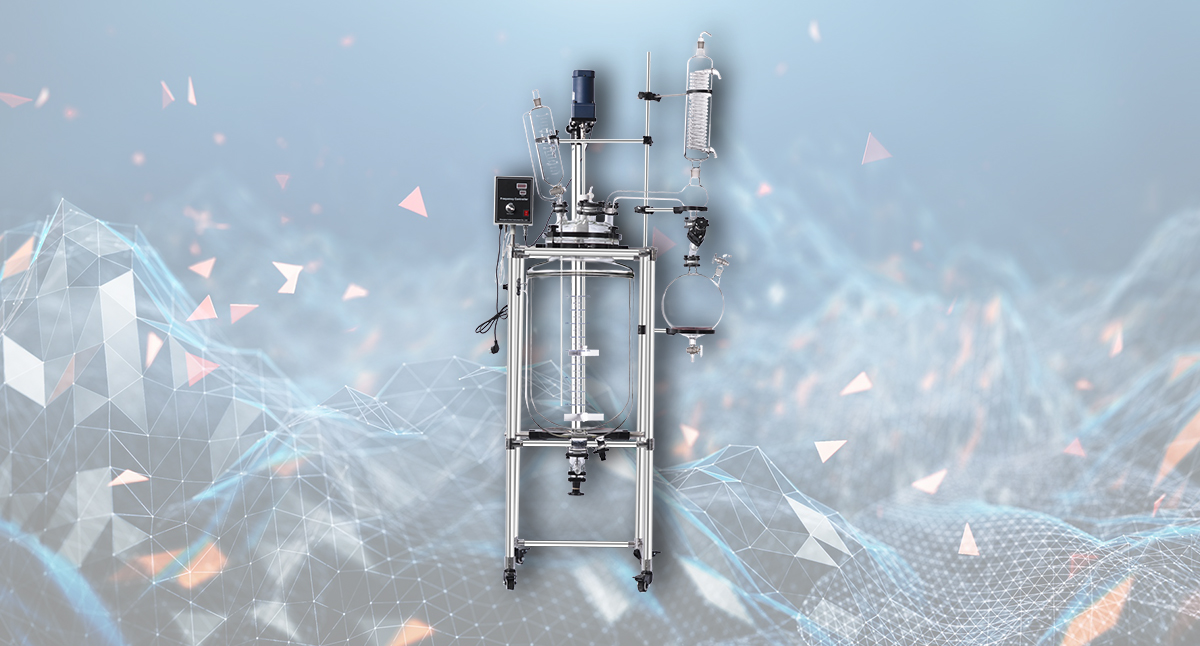
Which experiments require the use of double layer glass reactors?
In laboratories in the fields of chemistry, pharmaceuticals, biotechnology, etc., reaction vessels are the core equipment for conducting various chemical reactions and material processing. The "double layer glass reactor" (also known as the jacketed glass reactor) stands out among many reaction devices due to its unique structural design (the inner and outer layers of glass form a layer of recyclable temperature medium), becoming an "indispensable tool" for specific experiments. So, what kind of experiment requires a double layer glass reactor?
Chemical reactions that require precise temperature control (especially strongly exothermic/endothermic reactions)
Scenario: Organic synthesis (such as esterification, nitration, sulfonation), polymerization reaction (polymer synthesis), recrystallization, metal organic reaction, etc.
This type of reaction is often temperature sensitive, and a deviation of a few degrees may affect the reaction rate, product selectivity, and yield, and even cause side reactions or dangers. The jacket of the double-layer kettle can be filled with circulating water/oil (heating) or freezing liquid (such as low-temperature ethanol/ethylene glycol aqueous solution, cooling), and stable and uniform temperature control within the range of -80℃ to 250℃ (depending on the kettle material and sealing components) can be achieved through an external "constant temperature circulating bath", which is an accuracy that single-layer kettles or ordinary flasks cannot achieve.