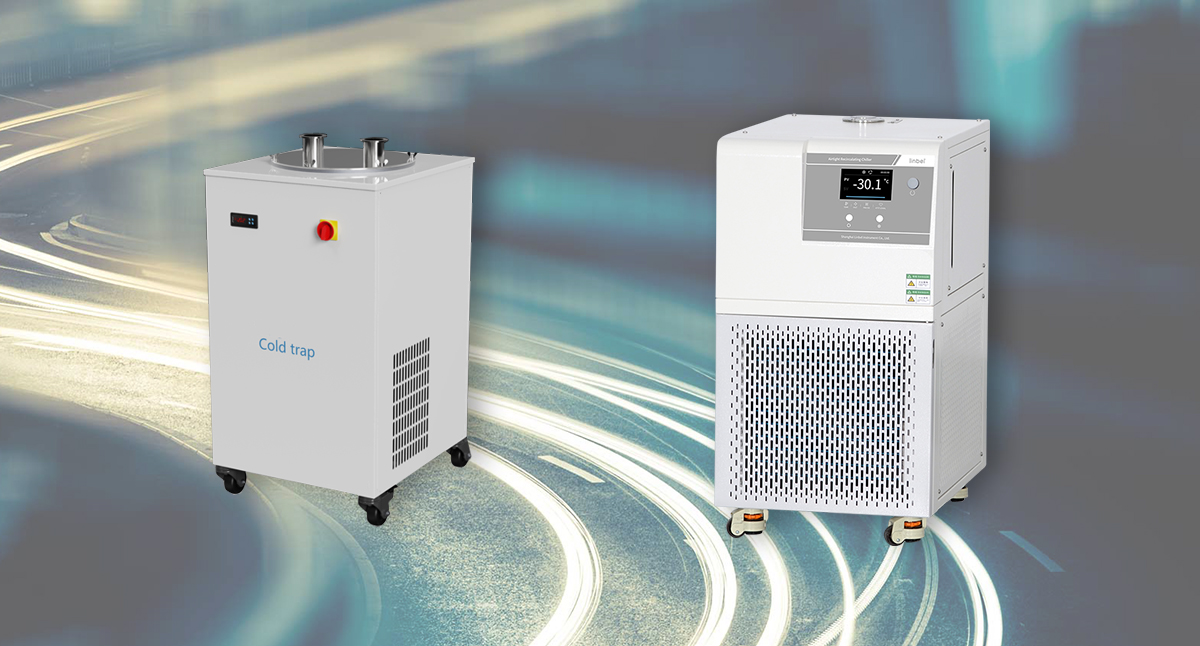
Low temperature cold trap and low-temperature circulation chiller: full analysis of working principle and application scenarios
In modern laboratories and industrial refrigeration fields, low-temperature cold traps and low-temperature circulation chiller are two common but functionally distinct devices. Although the names all contain the word 'low temperature', there are significant differences in their design principles, application scenarios, and working methods.
Low temperature cold trap:
An efficient steam capture expert, a low-temperature cold trap is a device that captures condensable components in gas or steam through a low-temperature surface. Its core function is to set up a low-temperature area in the vacuum system or gas circulation path, allowing the target substance to condense on the low-temperature surface.
Working principle: Low temperature traps typically create a low-temperature environment (up to -196 ℃) using liquid nitrogen, dry ice, or other refrigerants. When gas flows through a cold trap, high boiling point components will condense and deposit on the inner wall of the cold trap, thereby achieving the purpose of separation or purification.
Low temperature circulation chiller:
Accurate temperature control expert. Low temperature circulation chiller is a device that uses mechanical refrigeration to cool the coolant and circulate it to the equipment that needs to be cooled. It can provide a stable and adjustable low-temperature environment.
Working principle: The low-temperature circulation chiller reduces the temperature of the refrigerant (such as ethanol, silicone oil, etc.) through the compressor refrigeration system, and then transports the low-temperature liquid to the equipment that needs to be cooled through the pump, forming a closed circulation system.